Choosing the Right Cute House Box for Your Next Craft Project
When evaluating crafting resources for small-scale projects, finding a design that balances aesthetic appeal with functional versatility is often the primary challenge. The Cute House Box represents a specific category of digital crafting assets designed to solve this exact problem. It is not merely a template; it is a comprehensive solution for creating a three-dimensional structure that resembles a miniature home. What distinguishes this particular design from standard flat cards or simple containers is its dual nature: it functions as an adorable 3D house while simultaneously serving as a practical box that opens on the bottom. This duality makes it a compelling option for crafters looking to elevate their gift-giving or party favor presentations without requiring advanced woodworking skills.
Understanding the Design and Versatility
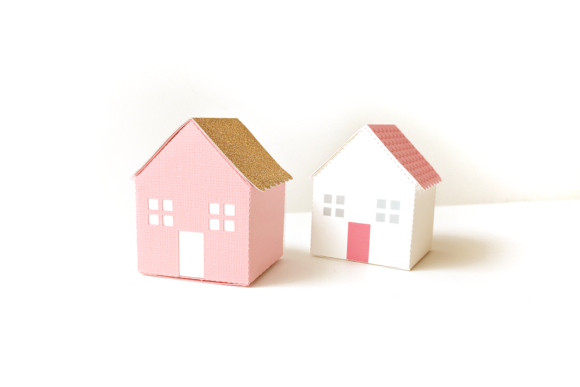
The core appeal of the Cute House Box lies in its detailed yet manageable construction. Visually, the finished product features a charming shingled roof, a defined front door, and specific window configurations including a pair of four-pane windows on the facade and another set on the rear side. These details provide a level of realism that transforms a simple paper cutout into a decorative object. However, the true utility of this design emerges when examining its physical dimensions and assembly. Once assembled and folded, the finished house box measures 1.75 x 1.75 x 2.25 inches. While compact, this size is strategically chosen to hold small items such as candies, jewelry, or favors, making it ideal for events where space and cost are considerations.
A critical factor in the evaluation of any crafting resource is adaptability. The Cute House Box is engineered with full editability regarding both color and size. For users who wish to match a specific brand palette or event theme, the ability to adjust these parameters ensures the final product remains cohesive. Furthermore, the instruction manual included with the design provides a clear roadmap for assembly, reducing the cognitive load often associated with complex 3D models. Whether you are creating a single item or producing a batch for a large gathering, the instructions ensure consistency across all units.
Comparing Cutting Methods: Digital vs. Manual
One of the most significant decision points for potential users is the method of fabrication. The market offers various pathways to create paper crafts, ranging from high-tech electronic cutting machines to traditional hand-cutting techniques. The Cute House Box addresses this spectrum by providing files tailored to both approaches, ensuring accessibility regardless of a crafter's equipment budget.
For those equipped with modern technology, the design includes an SVG file. This format is optimized for use with popular electronic cutting machines such as the Cricut Explore, Silhouette machines, Brother devices, and other compatible systems using software like Cricut Design Space. The SVG format allows for precise scaling and layering within digital design environments. Users can manipulate the design elements before sending them to the machine, offering a high degree of control over the final output. Additionally, a DXF file is provided, expanding compatibility to professional-grade software and machines like Graphtec plotters or AutoCAD users. This broad file support indicates a design intended for both hobbyists and semi-professionals.
However, not every enthusiast has access to an electronic cutter. Recognizing this limitation, the package includes a print-and-cut PDF version. This file is designed for users who prefer to print the pattern onto cardstock and cut the pieces manually with scissors or a craft knife. While hand-cutting requires more time and patience than operating a machine, it eliminates the need for expensive hardware. The inclusion of this option democratizes the project, allowing anyone with a printer and basic tools to participate. The tradeoff here is primarily time efficiency versus cost savings, but the Cute House Box accommodates both priorities effectively.
Evaluating Size Constraints and Resizing
When comparing the Cute House Box to other 3D paper structures, the fixed ratio of its components becomes a vital consideration. The design is built on a system where all pieces must interlock perfectly to form the cube-like structure. Consequently, resizing presents a specific technical requirement. If a user wishes to scale the Cute House Box up or down, they must ensure that all pieces are scaled at the same time. Failure to maintain this proportional relationship will result in parts that do not align, rendering the box unassembleable.
This constraint differentiates the Cute House Box from modular designs where individual panels can be adjusted independently. For users needing a significantly larger container, this limitation might suggest exploring alternative architectural templates that offer more flexibility. However, for the intended use case of holding small gifts or treats, the 1.75-inch width is often sufficient. The strict adherence to proportions ensures structural integrity, meaning that once resized correctly, the box will remain sturdy enough to hold its contents without collapsing. This reliability is a key strength when compared to generic templates that may warp or fail under minor stress.
Determining the Best Fit for Your Needs
Selecting the right resource depends heavily on the specific goals of the project. The Cute House Box is particularly well-suited for scenarios requiring a high volume of uniform, small containers. Events such as weddings, baby showers, or birthday parties often demand hundreds of identical favors. In these situations, the combination of electronic cutting capabilities and the inclusion of print-ready PDFs offers a flexible workflow. A user with a Cricut machine can produce dozens of boxes quickly, while a volunteer without one can handle the printing and cutting tasks.
Conversely, if the project requires a container capable of holding bulky items, the current dimensions may fall short. The 1.75 x 1.75 x 2.25 inch footprint is inherently limited by its design intent. In such cases, users might find value in searching for "large gift boxes" or "tall 3D paper containers" instead. Similarly, for users seeking a completely custom shape that deviates from the traditional house aesthetic, the rigid structure of the Cute House Box might feel restrictive. Alternatives in the form of origami-style boxes or open-top baskets could offer more creative freedom, though perhaps less structural stability.
Final Considerations for Decision Making
The decision to utilize the Cute House Box ultimately rests on a balance between aesthetic desire and practical constraints. Its distinct features—the shingled roof, the functional opening mechanism, and the multi-format file support—make it a robust choice for the average crafter. It bridges the gap between simple paper crafts and more complex DIY projects by providing clear instructions and versatile file formats.
While no single design fits every scenario, the Cute House Box excels in the niche of small, decorative storage. It is an excellent choice for those who want to add a touch of whimsy to their packaging without investing in expensive molds or materials. By understanding the requirements for resizing and choosing the appropriate cutting method, users can maximize the potential of this design. Whether produced via a high-speed electronic cutter or carefully crafted by hand, the result is a charming, functional piece that elevates the presentation of even the smallest gifts.