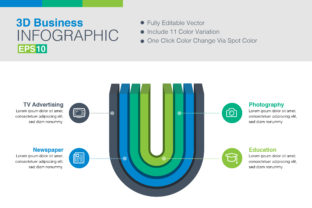
3D Vector Infographic: A Comprehensive Evaluation for Modern Design Projects
In the contemporary landscape of visual communication, data representation has evolved beyond simple charts and flat icons. The demand for engaging, three-dimensional content has surged across various sectors, leading to the widespread adoption of 3D vector infographic elements. These assets allow designers to create depth, realism, and visual hierarchy that flat designs often struggle to achieve. For professionals seeking to enhance presentations, annual reports, or marketing materials, understanding the capabilities and limitations of a 3D vector infographic pack is essential before making a selection.
This evaluation explores the utility of 3D business infographic element packs, specifically focusing on their application in professional design workflows. By examining the features, benefits, and potential tradeoffs, this guide aims to help readers determine if these tools align with their specific project requirements.
Understanding the 3D Vector Infographic Element
A 3D vector infographic refers to a set of scalable graphic assets designed to represent business concepts with a realistic, three-dimensional appearance. Unlike raster images (such as JPEGs or PNGs), which lose quality when resized, vector files are composed of mathematical paths. This ensures that the graphics remain crisp at any size, from a small mobile screen to a large-scale billboard.
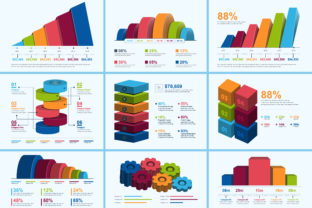
The core value of a 3D vector pack lies in its modularity. Instead of purchasing a single static image, users acquire a library of individual components—such as gears, graphs, buildings, people, and abstract shapes. These elements can be rearranged, recolored, and combined to construct unique infographics tailored to specific narratives. The "Modern and Fresh" color schemes typically found in these packs provide a clean aesthetic that appeals to corporate audiences, though the editable nature of the files allows for complete customization to match brand guidelines.
Key Benefits for Professional Designers
The primary advantage of utilizing a dedicated 3D vector infographic kit is efficiency. For freelancers and agencies working under tight deadlines, creating high-quality 3D assets from scratch requires significant time and specialized skills. A comprehensive pack containing over 35 distinct elements offers a shortcut to professional results.
- Time Efficiency: With pre-modeled elements, designers can assemble complex visual stories in minutes rather than hours. This is particularly valuable when producing multiple variations of a report or presentation.
- Scalability and Flexibility: Because the files are saved in formats like EPS and AI CS5, they can be rescaled without pixelation. This versatility supports use across diverse media, including PowerPoint presentations, brochures, annual reports, and promotional emails.
- Customization Capabilities: Most high-quality packs include four different color variations. Furthermore, because the files are fully editable in software like Adobe Illustrator, users can alter dimensions, combine shapes, and adjust lighting effects to suit their specific design preferences.
- Variety of Applications: These elements are not limited to internal business documents. They are equally effective for CV resumes, advertising campaigns, business trend analysis, and marketing materials where visual impact is crucial.
Practical Considerations and Tradeoffs
While the advantages are substantial, potential users must consider the technical requirements and learning curve associated with these assets. Owning the file does not guarantee immediate success; it requires a baseline of technical proficiency.
Software Proficiency: To fully leverage a 3D vector pack, the user must possess knowledge of vector editing software. While the files are ready to use, unlocking their full potential involves grouping objects, ungrouping layers, and manipulating paths. Users unfamiliar with Adobe Illustrator or similar tools may find the initial setup challenging compared to drag-and-drop templates found in web-based design platforms.
File Management: High-resolution vector files can sometimes be large and complex. Managing hundreds of layers within a single document can slow down performance if the computer hardware is not up to standard. Additionally, ensuring compatibility between different versions of design software (e.g., older AI versions vs. newer CC updates) is necessary to avoid rendering errors.
Design Consistency: Although packs offer variety, there is a risk of the final output looking generic if the elements are used without careful curation. Over-reliance on pre-made 3D assets can lead to designs that lack a unique brand identity. It is important to modify the default colors and arrangements to ensure the infographic reflects the specific tone of the project.
Situations Where 3D Vector Packs Are Ideal
Certain scenarios make the use of a 3D vector infographic pack an optimal choice. These situations typically involve a need for high visual impact combined with strict scalability requirements.
- Corporate Presentations: When presenting business trends or financial analysis to stakeholders, 3D elements add a layer of sophistication and authority that flat icons cannot match.
- Annual Reports: Large-format documents benefit from the ability to scale graphics to fit wide spreads while maintaining sharp edges and realistic shading.
- Marketing Campaigns: For advertising materials that require eye-catching visuals, the "fresh" modern look of 3D elements helps capture attention quickly in crowded marketplaces.
- Freelance Projects: For independent designers juggling multiple clients, the ability to generate five distinct infographics from a single pack represents a significant return on investment, saving both time and money.
When Alternatives May Be Worth Considering
Despite their versatility, 3D vector packs are not suitable for every project. Readers should evaluate alternatives based on their specific constraints.
If the goal is rapid prototyping without technical overhead, web-based infographic builders with drag-and-drop interfaces might be more appropriate. These tools often provide instant access to 3D styles without requiring vector editing skills. Similarly, for projects requiring highly stylized, artistic illustrations that deviate significantly from standard business imagery, hiring a custom 3D artist or illustrator may yield better results than modifying existing templates.
Furthermore, if the final output is strictly digital and viewed only on screens where file size optimization is critical, raster-based assets might be preferable to reduce loading times, although vectors generally offer superior quality for interactive web elements.
Decision-Making Insights
Selecting the right tool depends on balancing the need for visual quality against available resources. If you have access to vector editing software and a foundational understanding of design principles, a 3D vector infographic pack is a powerful asset. It transforms the design process from creation to assembly, allowing you to focus on the narrative and data storytelling rather than the geometry of the graphics.
However, if your team lacks vector editing experience or the project requires a unique artistic style that off-the-shelf elements cannot replicate, investing in custom services or simpler design tools may be a wiser allocation of budget and time. Ultimately, the decision should hinge on whether the efficiency gains of using a template outweigh the potential loss of total creative control.
By carefully assessing these factors, designers can determine if a 3D vector infographic pack is the correct solution for their upcoming projects. Whether for a brochure, a resume, or a comprehensive business analysis, the right choice ensures that the final deliverable is both visually compelling and technically sound.