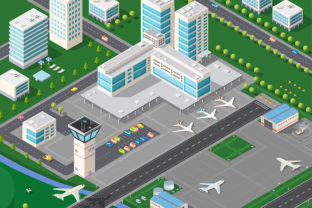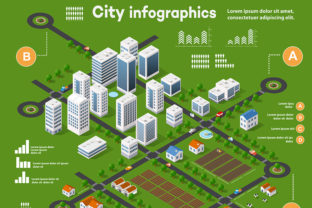
3D City Isometric Three-dimensional Info: Visualizing Urban Complexity with Clarity
In a world saturated with data, the way we present information is just as critical as the data itself. 3D City Isometric Three-dimensional Info has emerged as a powerful tool for transforming abstract numbers into tangible, engaging narratives. Unlike flat charts or standard 2D maps, this visual approach combines architectural depth with strategic data plotting, creating a scene that feels both familiar and futuristic. It is not merely an aesthetic choice; it is a functional method for navigating complex urban landscapes, business strategies, and logistical challenges.
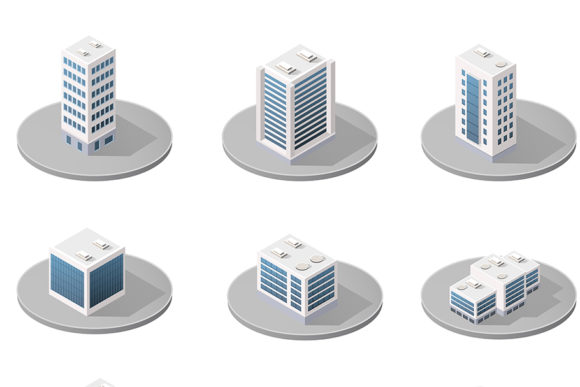
Imagine standing on a virtual hill overlooking a bustling metropolis. You see towering skyscrapers representing market share, cozy homes symbolizing customer retention, and winding streets illustrating supply chain routes. This is the essence of 3D city isometric three-dimensional infographics. By leveraging a specific perspective known as isometric projection, designers can create a sense of depth without the distortion of vanishing points, allowing viewers to understand scale, distance, and relationships simultaneously. This unique blend of illustration, vector design, and business concept creates a versatile medium that speaks directly to the modern eye.
Why the Isometric Perspective Resonates in Business
The shift toward isometric visuals isn't accidental. For professionals aged 20 to 50 who navigate digital environments daily, this style offers immediate cognitive relief. Traditional graphs often require mental translation—converting a bar height into a percentage. In contrast, a 3D city infographic allows the brain to process context instantly. When you see a "store" icon growing larger than a "home" icon within a city block, the message about commercial dominance versus residential stability is communicated in a split second.
This format excels at breaking down barriers between technical data and creative storytelling. It transforms dry corporate reports into interactive experiences. Whether it is a startup pitching a new app or a logistics firm planning a delivery network, the use of isometric elements like cars, trees, and roads adds a layer of realism that makes the information stick. The "flat" design trend has evolved, and now, the most effective designs are those that offer dimension without overwhelming the user with photorealistic textures that slow down loading times.
Real-World Applications Across Industries
The utility of 3D City Isometric Three-dimensional Info extends far beyond simple decoration. Different sectors are finding unique ways to apply these concepts to solve real-world problems.
- Urban Planning and Architecture: Architects and city planners utilize these models to visualize future developments before a single brick is laid. They can overlay population density data onto residential zones or map traffic flow patterns along streets and roads. This helps stakeholders understand how a new skyscraper might impact sunlight access or wind patterns in a neighborhood.
- Tech and SaaS Platforms: Software companies frequently use city illustrations to represent their cloud infrastructure or user bases. A server farm might be depicted as a cluster of industrial buildings, while active users are represented by moving cars on the grid. This makes abstract technology feel grounded and accessible.
- Real Estate and Development: For property developers, a 3D city map serves as a powerful sales tool. Potential investors can take a virtual tour of a planned community, seeing the relationship between apartments, parks, and commercial centers. It allows them to grasp the "neighborhood vibe" better than a spreadsheet ever could.
- Logistics and Supply Chain: Managing a global network requires understanding geography and connectivity. Isometric diagrams can highlight bottlenecks in a delivery route, showing how a traffic jam in one area affects the entire system. The inclusion of transportation icons and navigators helps teams visualize the flow of goods from factory to doorstep.
Designing for Clarity: Key Elements and Considerations
Creating an effective 3D City Isometric Three-dimensional Info piece requires more than just stacking 3D shapes. It demands a thoughtful arrangement of elements to ensure the message is not lost in the noise. The success of these visuals often lies in the balance between detail and simplicity.
When selecting components, consider the role of each object. A tree or plant might represent sustainability goals, while a construction site could indicate growth or development phases. However, overloading the scene with too many icons or symbols can confuse the viewer. The goal is to guide the eye naturally through the plan using color, size, and elevation.
Color psychology plays a massive role here. In a business context, cool blues and greens often convey trust and eco-friendliness, while warm oranges and reds might highlight urgency or high activity zones. Because these images are often used in web design or graphic presentations, they must remain crisp at various resolutions. Vector-based assets are ideal because they allow for scaling without losing quality, ensuring the model looks professional on a mobile screen or a large conference display.
Navigating Limitations and Challenges
While isometric design is incredibly versatile, it is not a magic bullet. There are practical limitations to keep in mind when applying this style. One of the primary challenges is data accuracy. In a true isometric view, objects at the top of a building appear smaller than those at the bottom due to perspective rules, which can sometimes make precise measurement difficult compared to a blueprint.
Additionally, there is a risk of "visual clutter." If a designer tries to include every possible object—from every type of house to every kind of car—the core message may get buried. The audience needs to focus on the concept, not the decorative details. Furthermore, accessibility is a crucial consideration. High-contrast colors and clear labels are essential for users with visual impairments. A beautiful illustration fails if the text describing the data is unreadable against a busy background.
Another consideration is the time and cost involved in production. While pre-made collections of vector assets are available, custom 3D city isometric three-dimensional info tailored to specific brand identities requires skilled artists. It is important to weigh the return on investment. Is the project complex enough to warrant a custom model, or would a simplified set of icons suffice?
Future Trends in Urban Visualization
As technology advances, the line between static infographics and interactive experiences continues to blur. We are seeing a rise in interactive 3D maps where users can click on a specific building to reveal detailed statistics about its energy usage or occupancy rates. This interactivity turns passive viewing into active exploration.
The integration of augmented reality (AR) also promises to revolutionize how we use these visuals. Imagine pointing your phone at a blank lot and seeing a 3D city isometric three-dimensional info overlay showing what the completed project will look like, complete with animated traffic and lighting changes throughout the day. This level of immersion provides a deeper understanding of the global impact of local decisions.
For creatives and strategists, the opportunity lies in adapting these styles to fit diverse narratives. Whether it is a cartoon-style representation for a youth-focused app or a sleek, metallic modern aesthetic for a financial report, the underlying principle remains the same: make the complex simple. By focusing on the story behind the architecture and the landscape, designers can create visuals that are not just seen, but understood.
Ultimately, 3D City Isometric Three-dimensional Info represents a convergence of art and logic. It allows us to see our cities, our businesses, and our data in a new light. By embracing the strengths of this format while remaining mindful of its limitations, professionals can communicate their ideas with greater clarity, creativity, and impact. The next time you need to explain a complex system, consider stepping out of the flat plane and building a world where your data can truly come to life.