Objects of Industrial Plants: Elevating Digital Assets for the Modern Creator
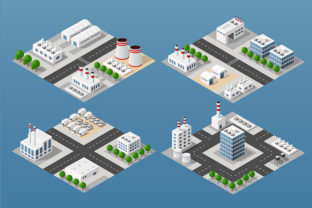
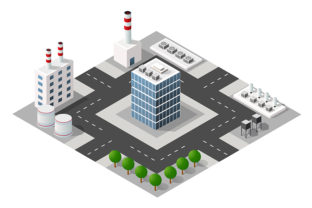
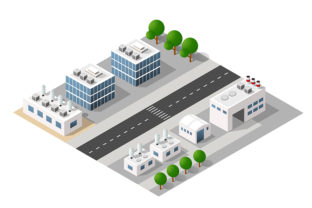
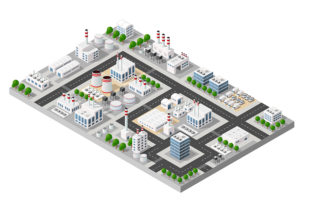
In an era where digital aesthetics increasingly mimic tactile experiences, the demand for high-quality, versatile design assets has never been more critical. Among the vast array of resources available to professionals and enthusiasts alike, Objects of Industrial Plants stands out as a distinctive collection that bridges the gap between heavy industry and delicate craftsmanship. This set offers a 3D perspective view of factories, warehouses, parking lots, and urban infrastructure, rendered in a precise isometric style. By providing these files in accessible formats like JPG and EPS, the collection serves as a foundational tool for a diverse spectrum of creative projects, from complex web layouts to intimate paper goods.
The relevance of industrial imagery in contemporary design cannot be overstated. As we navigate a world defined by logistics, manufacturing, and rapid urbanization, visual representations of these environments resonate deeply with audiences. The Objects of Industrial Plants folder captures this essence, offering a clean, organized, and highly detailed look at the machinery of modern life. Whether you are a marketer crafting a campaign for a logistics company or a designer creating a whimsical invitation, the ability to incorporate realistic yet stylized industrial elements adds a layer of sophistication and context that generic stock photos often lack.
The Strategic Value of Isometric Industrial Design
The specific aesthetic choice of an isometric view from above transforms how users perceive complex structures. Unlike traditional photography, which can be cluttered or overly literal, the isometric perspective simplifies architectural complexity into digestible, engaging graphics. This approach aligns perfectly with current trends in data visualization, UI/UX design, and educational content. When businesses need to explain supply chains, factory outputs, or warehouse operations, a static image often fails to convey scale and relationship. However, the 3D perspective provided in this set allows creators to illustrate these concepts clearly and attractively.
For professionals in the technology sector, these assets are invaluable. Web pages and blogs frequently require visual breaks that maintain user engagement without slowing down load times. High-quality JPG files ensure crisp rendering on all devices, while the inclusion of EPS (Encapsulated PostScript) files provides vector-like scalability for print applications. This dual-format capability addresses the modern workflow requirement of "create once, use everywhere." A single asset can serve as a hero image on a corporate landing page, a background texture for a mobile app, and a cut-out element for a physical brochure, ensuring brand consistency across all touchpoints.
Bridging Industry and Artistry: Practical Applications
The versatility of Objects of Industrial Plants extends far beyond corporate presentations. One of the most compelling aspects of this collection is its adaptability to the booming DIY and papercraft markets. In recent years, there has been a significant shift towards personalized, handmade items in events and lifestyle sectors. Consumers are moving away from mass-produced stationery toward unique, custom-designed pieces that reflect their personal stories. This trend has created a surge in demand for high-resolution clip art that can be easily integrated into scrapbooking, card design, and various papercrafts.
Imagine a wedding invitation suite that features subtle industrial motifs to represent a couple's shared love for architecture or travel. The trees, streets, and buildings within this set can be used to create intricate backdrops for such announcements. Similarly, party favors and cupcake toppers benefit immensely from the detailed nature of these objects. A birthday party with a "City Builder" theme could utilize the parking lots and warehouses to create a playful, three-dimensional scene on top of cakes or as centerpieces. The precision of the isometric view ensures that when these designs are printed, they retain their structural integrity and visual appeal.
Furthermore, the utility of these files reaches into the realm of fashion and accessories. Personal t-shirts, banners, and signage often require graphics that are both bold and scalable. The EPS format included in the folder allows designers to manipulate the size of the industrial plants without losing resolution, making them perfect for large-scale printing on fabric or vinyl. Labels and stickers featuring these motifs can transform mundane packaging into memorable brand experiences. For example, a coffee shop might use a small warehouse graphic on their cup sleeves to evoke a sense of community and local sourcing, connecting the consumer emotionally to the product.
Meeting Evolving Consumer Expectations
Why are people paying attention to collections like Objects of Industrial Plants? The answer lies in the changing expectations of the modern consumer. Today's audience values authenticity, transparency, and visual storytelling. They want to see the "behind the scenes" of industries that power their daily lives. By incorporating these realistic yet artistic representations of factories and urban landscapes, creators can humanize complex systems. This resonates with a demographic that is increasingly conscious of sustainability, urban planning, and the origins of the products they buy.
Moreover, the flexibility of these assets supports the growing gig economy. Freelancers and entrepreneurs often wear multiple hats, requiring tools that can pivot quickly between different types of projects. A freelancer working on a calendar design one week might find themselves designing address labels the next. Having a repository of high-quality, ready-to-print files eliminates the need to commission custom illustrations for every project, saving time and resources. This efficiency is crucial for maintaining profitability and meeting tight deadlines in a fast-paced market.
The integration of these objects also speaks to the broader trend of cross-industry collaboration. Designers are no longer siloed; they work across marketing, education, entertainment, and retail. The ability to use a single set of images for a blog post about urban development, a children's book about city living, and a promotional banner for a trade show demonstrates the power of versatile digital assets. It allows for a cohesive narrative that spans different mediums, reinforcing brand identity and message clarity.
Future-Proofing Your Creative Workflow
As we look toward the future of design and commerce, the importance of high-fidelity, adaptable assets will only grow. The rise of augmented reality (AR) and virtual reality (VR) in e-commerce suggests that 3D models and perspectives will become even more central to online shopping experiences. While Objects of Industrial Plants is currently distributed in standard formats, the principles behind its creation—clarity, scale, and detail—are directly applicable to emerging technologies.
Entrepreneurs who invest in quality assets now are positioning themselves ahead of the curve. By utilizing these files for innovative purposes, such as interactive maps on websites or dynamic social media content, businesses can differentiate themselves in crowded marketplaces. The inclusion of natural elements like trees alongside the industrial structures also reflects a growing desire for balance between nature and technology, a theme that is highly relevant in discussions about green cities and sustainable development.
In conclusion, Objects of Industrial Plants represents more than just a collection of images; it is a toolkit for storytelling in a visually driven world. Whether you are designing a wedding invitation, launching a new website, or creating merchandise for your brand, the isometric views of factories, warehouses, and cityscapes provide a robust foundation for your creativity. The combination of JPG and EPS formats ensures that these assets are ready for immediate use in any medium, empowering professionals and enthusiasts to bring their visions to life with precision and style. As the lines between digital and physical continue to blur, having access to such versatile and high-quality resources remains a key factor in achieving success and sparking innovation.
For those looking to expand their portfolio or enhance their projects, exploring the potential of these industrial objects is a strategic move. From scrapbooking and paper goods to digital signage and web design, the applications are limited only by imagination. By embracing these tools, creators can produce work that is not only aesthetically pleasing but also meaningful and relevant to the world around us.