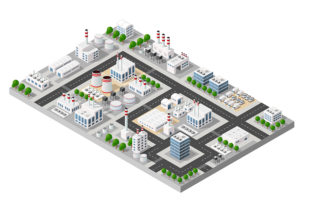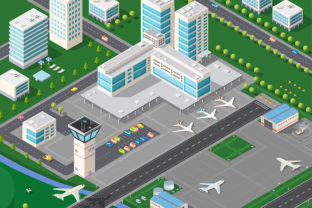
3D Isometric Industrial Landscape of the Modern Urban Ecosystem
In the realm of digital design and strategic planning, visualizing complex systems requires more than just a flat representation. The 3D isometric industrial landscape of the city airport serves as a critical tool for professionals ranging from urban planners to marketing strategists. This specific style of illustration combines technical precision with aesthetic clarity, allowing stakeholders to grasp the scale and function of an aerodrome at a glance. By integrating elements like the terminal building, runway infrastructure, and various modes of transport, these visuals provide a comprehensive map of connectivity that drives decision-making in both tourism and logistics sectors.
The Strategic Value of Isometric Visualization
Understanding the mechanics of a 3D isometric view is essential before attempting to integrate it into your workflow. Unlike perspective drawings that distort depth based on the viewer's eye level, isometric projection maintains parallel lines and consistent scaling. This makes it ideal for depicting industrial landscapes where accuracy in spatial relationships matters. When you are analyzing a city airport, every element—from the skyscrapers surrounding the perimeter to the cargo planes on the tarmac—must be proportionate to convey the true magnitude of the operation.
This format is particularly effective during the planning phase of large-scale projects. Whether you are designing a new transportation hub or creating a promotional campaign for a travel agency, the ability to show the interaction between the airline, the ground transport, and the passenger flow is invaluable. It transforms abstract data about flight schedules and capacity into a tangible, interactive-looking environment. For freelancers and small business owners, this means presenting proposals that are immediately understandable to clients who may not have a technical background.
Integrating Airport Infrastructure into Broader Workflows
The application of these illustrations extends far beyond simple aesthetics. In a practical business context, a detailed vector of an airport scene acts as a central node in a larger communication strategy. Consider a scenario where a logistics company needs to explain its supply chain efficiency to investors. A standard chart might list numbers, but a custom isometric illustration showing the journey from a cargo plane landing to a truck departing the terminal tells a story of speed and reliability.
When preparing for such a project, compatibility with existing tools is paramount. These assets are typically created as vector files, ensuring they can be scaled without losing quality whether used on a mobile app interface or a massive billboard. This flexibility allows designers to extract specific elements—such as a helicopter, a bus, or a skyscraper—and repurpose them across different media channels. The consistency of the visual language ensures that the brand identity remains intact throughout the entire user journey, from initial interest to final booking.
Key Components of the Visual Narrative
To create a cohesive narrative, one must understand how individual components interact within the landscape. The runway is not merely a strip of concrete; it represents the primary artery of movement. Its placement relative to the terminal building dictates the flow of passengers and vehicles. In a well-designed composition, the road network connects seamlessly to the airside operations, illustrating the seamless transition between ground and air travel.
- Transportation Hubs: The inclusion of cars, buses, and trains highlights the multimodal nature of modern travel, emphasizing convenience for tourists and business travelers alike.
- Architectural Details: Modern construction styles in the terminal and nearby town buildings reflect the economic vitality of the region, adding a layer of realism to the design.
- Aircraft Variety: Featuring different types of airplanes, from commercial jets to smaller private craft, demonstrates the diversity of services offered by the facility.
- Atmospheric Elements: The sky and lighting conditions set the mood, indicating whether the scene depicts a busy departure time or a quiet night operation.
Practical Implementation for Creators and Marketers
For content creators and marketers, leveraging these high-quality visuals can significantly enhance engagement rates. Social media algorithms favor content that captures attention quickly. An isometric view of a bustling airport offers a sense of depth and activity that static photos often lack. It invites the viewer to explore the details, increasing the time spent on a page or post.
When implementing this asset into a marketing campaign, focus on the emotional connection to travel. Use the imagery to evoke feelings of adventure, business success, or family vacation. If you are targeting corporate clients, highlight the efficiency of the infrastructure and the reliability of the aviation services. The key is to align the visual tone with the message you wish to convey. A colorful, vibrant palette might work best for a tourism board, while a cooler, more muted scheme could suit a corporate aviation report.
Furthermore, these illustrations serve as excellent educational tools. Educators can use them to explain concepts of urban planning, geography, or economics. By breaking down the complex system of an airport into manageable visual chunks, students can better understand how different sectors—industry, transport, and communication—overlap. This approach simplifies learning and retention, making complex topics accessible to a wider audience.
Quality Control and Long-Term Usability
Maintaining the integrity of your visual assets over time requires careful organization and version control. As projects evolve, the need to update certain elements arises. Perhaps a new terminal is added, or a new fleet of aircraft is introduced. Because isometric designs are modular, updating a single component does not require redrawing the entire scene. This efficiency saves significant time and resources in the long run.
Consistency is also crucial when managing multiple assets. Ensure that the color palettes, line weights, and shading techniques remain uniform across all documents. This creates a professional look that builds trust with your audience. When sourcing or creating these images, verify that the file formats support future editing. Vector-based formats allow for easy adjustments, whereas raster images may lose clarity upon scaling.
Optimizing for Different Platforms
Different platforms demand different approaches to visual presentation. On a website, interactive isometric maps can engage users, allowing them to hover over specific areas to learn more about the facility. In printed materials, high-resolution versions ensure that fine details like tower structures and road markings remain crisp. For mobile applications, simplified versions of the landscape prevent clutter while still conveying the necessary information.
By adapting the complexity of the 3D isometric industrial landscape to the medium, you maximize the impact of your content. This adaptability is what separates professional-grade work from amateur attempts. It shows a deep understanding of the user experience and the technical constraints of various delivery channels.
Conclusion: A Tool for Future-Ready Planning
The 3D isometric industrial landscape of the city airport is more than just a pretty picture; it is a functional instrument for planning, communication, and storytelling. Whether you are mapping out a new route for a logistics company, designing a travel brochure, or teaching the intricacies of urban infrastructure, this visual style provides the clarity needed to succeed. By focusing on the interplay between buildings, vehicles, and people, you create a dynamic representation of the modern world.
As technology advances, the role of such illustrations will only grow. They bridge the gap between raw data and human understanding, offering a window into the complex systems that power our global economy. Embracing these tools in your workflow ensures that your projects are not only visually appealing but also strategically sound and practically executable. Start integrating these elements today to elevate your communication and drive better outcomes in your professional endeavors.