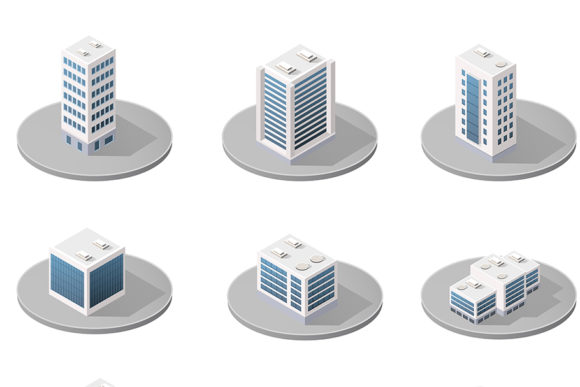
Unlocking the Visual Potential of 3D Isometric City Icons
In the rapidly evolving landscape of digital design, visual communication has become more critical than ever. Whether you are creating a landing page for a real estate startup, designing a map interface for a logistics company, or illustrating a concept for an urban planning project, the ability to convey complex spatial information quickly and clearly is paramount. This is where 3D isometric city icons shine. These unique graphic elements have transitioned from niche design trends to essential tools in modern web development, app interfaces, and business presentations.
At their core, these icons represent a specific type of three-dimensional projection that offers a distinct advantage over traditional flat or perspective-based illustrations. By utilizing an isometric vector style, designers can create detailed representations of buildings, architecture, and entire cityscapes that maintain precise proportions while adding depth and dimension. This article explores the significance of this design element, its practical applications across various industries, and why it remains a staple in the world of graphic design.
Understanding the Isometric Perspective
To truly appreciate the utility of 3D isometric city icons, one must first understand the geometry behind them. Unlike standard perspective drawings, which converge at vanishing points to simulate how the human eye sees distance, isometric projection uses parallel lines. In this system, the three axes (height, width, and depth) are equally foreshortened, typically meeting at 120-degree angles.
This technical approach yields several benefits that make it ideal for map design and icon sets:
- Consistency: Objects do not appear smaller as they move "further away," ensuring that every building or house in a set maintains a uniform scale.
- Clarity: The lack of distortion allows viewers to easily measure and compare dimensions, making it perfect for plan views and architectural illustrations.
- Aesthetics: The clean, geometric look provides a modern, organized feel that resonates well with tech-savvy audiences.
When combined with vector technology, these projections become infinitely scalable. Whether you need a tiny icon for a mobile app button or a massive exterior rendering for a billboard, the image quality remains crisp and sharp. This versatility is why modern designers prefer them over raster images for most UI/UX projects.
The Anatomy of a Complete Urban Collection
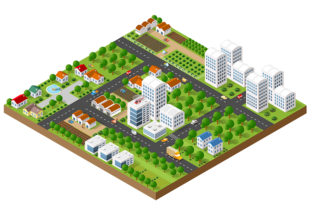
A robust collection of 3D isometric city icons goes far beyond simple skyscrapers. A comprehensive set acts as a miniature ecosystem, capturing the diverse facets of urban life. When browsing a high-quality icon set, you will often find a wide array of categories designed to tell a complete story about a location.
Consider the variety found in a typical urban library:
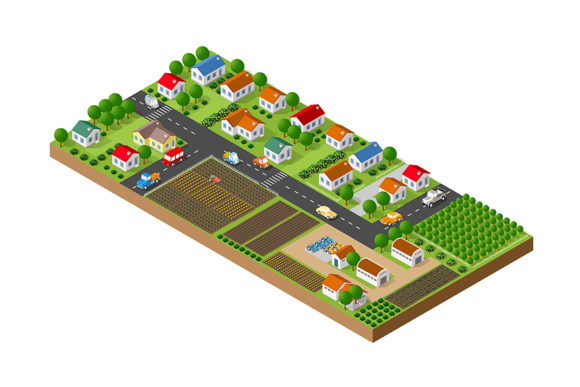
- Residential Structures: From cozy cottage homes and multi-story apartment blocks to sprawling real estate developments, these elements represent where people live. They often feature detailed facades, windows, and doors to add character.
- Commercial Hubs: Businesses are the lifeblood of any city. You will find office towers, shop fronts, restaurants, and cafes. These icons often include signage and awnings to denote their specific function.
- Public Services: A functioning city requires infrastructure. Collections frequently include police stations, schools, universities, and hospitals. These buildings help establish the community context within a design.
- Luxury and Hospitality: High-end hotel structures and business centers cater to travelers and professionals, often featuring grand entrances and distinctive architectural styles.
- Infrastructure: No city exists without roads. Road tiles, intersections, and traffic signs are crucial for connecting individual buildings into a cohesive street scene.
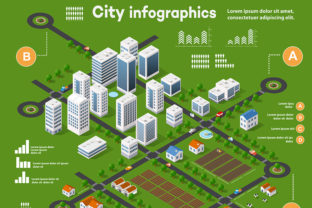
By mixing and matching these elements, designers can construct unique environments that range from bustling metropolises to quiet suburban neighborhoods. The ability to isolate these properties on a white background makes them incredibly versatile for use in logos, infographics, and marketing materials.
Practical Applications in Modern Business and Technology
The relevance of 3D isometric city icons extends well beyond artistic expression; they serve functional purposes in critical sectors of the economy and technology.
Real Estate and Property Development
In the real estate industry, visualization is key. Agents and developers use these icons to create compelling brochures and interactive websites. Instead of showing a boring list of properties, they can display an isolated home or a cluster of commercial units in a 3D format. This helps potential buyers visualize the front view, the layout, and the surrounding environment before visiting the site. It transforms abstract data into tangible assets.
Web Design and User Interfaces (UI)
For web developers and designers, isometric graphics are a powerful way to guide user attention. Imagine a website for a property management service. Using a collection of skyscraper and residence icons as section dividers or navigation buttons creates an immersive experience. Because they are vector based, they load quickly and adapt perfectly to different screen sizes, ensuring a smooth experience for users on both desktops and smartphones.
Education and Urban Planning
Educational institutions and urban planners utilize these illustrations to explain complex concepts. A teacher might use a set of school and university icons alongside road networks to teach students about zoning laws or city growth patterns. The clarity of the projection allows students to grasp spatial relationships that would be difficult to understand through text alone.
Gaming and Interactive Media
The gaming industry has long embraced isometric perspectives, particularly in strategy and simulation games. Players love managing cities, building towns, and constructing constructions in a grid-like environment. The same aesthetic principles apply to tile-based maps used in board games or digital apps. The signs, shops, and hotels provide immediate visual cues about the game's mechanics and objectives.
Bridging the Gap Between Art and Utility
One common misconception is that 3D isometric city icons are merely decorative. While they certainly enhance the visual appeal of a project, their primary value lies in their ability to communicate information efficiently. They bridge the gap between technical blueprints and artistic renderings.
Unlike a photorealistic 3D model, which can be overwhelming and slow to process, an isometric illustration strips away unnecessary details while retaining the essential form. This simplification allows the viewer to focus on the structure and function of the building. For example, a police station icon doesn't need to show every brick; it needs to show the recognizable shape and perhaps a badge or siren to convey its purpose instantly.
Furthermore, the color palette used in these designs plays a significant role. Designers often choose vibrant, consistent colors to differentiate between residential, commercial, and industrial zones. This color-coding system aids in quick comprehension, making the data easier to digest for the audience.
Conclusion: The Future of Urban Visualization
As we continue to digitize our lives, the demand for clear, engaging, and informative visuals will only grow. 3D isometric city icons offer a timeless solution to the challenge of representing complex urban environments in a simple, accessible format. From the humblest cottage to the tallest skyscraper, these icons capture the essence of our built world.
Whether you are a graphic designer looking to expand your asset library, a developer building a new platform, or a business owner trying to market your property, understanding and utilizing these elements can elevate your project to the next level. By leveraging the power of isometric projection, you create a visual language that speaks directly to your audience, fostering a deeper connection and clearer understanding of the urban landscape you wish to portray.
In a world saturated with information, clarity is king. And nothing communicates the structure of a city quite like a well-crafted set of 3D isometric city icons.