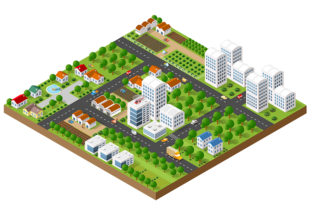
3D Isometric City Landscape Explained
A 3D isometric city landscape transforms the chaotic complexity of a real metropolis into a clean, organized visual puzzle. Imagine looking down at a bustling downtown district from a helicopter, but instead of seeing a flat, distorted map, you see buildings with depth, shadows, and distinct angles that reveal their structure without losing clarity. This unique perspective combines the precision of cartography with the artistic flair of modern illustration, creating a visual language that is instantly recognizable to anyone who has ever played a strategy game or viewed an architectural blueprint.
At its core, this style relies on parallel projection rather than linear perspective. In a standard 3D view, parallel lines converge at a vanishing point, making distant objects look tiny. In an isometric view, those lines remain parallel regardless of distance. This mathematical consistency allows designers to create a cityscape where skyscrapers, residential blocks, and winding streets maintain uniform proportions. The result is a world that feels three-dimensional yet remains perfectly legible, making it an ideal tool for conveying complex spatial relationships in a single image.
Why This Visual Style Captivates Creators and Businesses
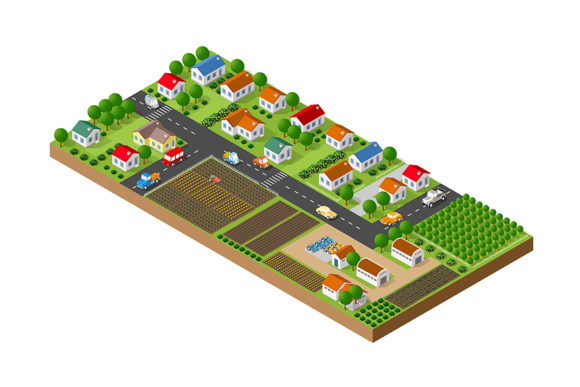
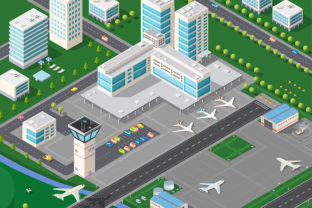
The appeal of a 3D isometric city landscape lies in its ability to tell a story without overwhelming the viewer. When you look at a detailed illustration featuring skyscrapers, gardens, and streets, your brain naturally organizes the information. You can instantly identify the business district by the tall towers, spot the residential areas through clusters of smaller houses, and locate the parks by the green trees. This makes the style incredibly effective for communication.
For professionals, this aesthetic offers a solution to the "flatness" problem often found in traditional maps or 2D diagrams. By adding height and volume to elements like office buildings, apartments, and transportation hubs, the image gains a sense of realism while retaining a stylized, approachable charm. It bridges the gap between technical architecture plans and engaging concept art.
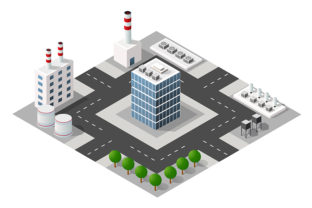
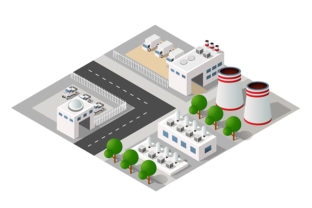
Furthermore, the isolation of elements in these scenes allows for creative freedom. Whether you are designing a mobile app interface or a website hero section, an isometric scene can be broken down into individual components. You can isolate a specific block, highlight a road, or focus on a single tower to draw attention to a specific feature without cluttering the entire composition.
Practical Applications Across Industries
The versatility of the 3D isometric city landscape extends far beyond simple decoration. Its structured nature makes it a powerhouse for various sectors, each utilizing the visual strengths of the format to solve specific problems.
- Digital Product Design: UI/UX designers frequently use isometric views to visualize data dashboards. A mockup of a smart city management system might show a map of the town where different colors represent traffic flow, energy usage, or population density within specific districts.
- Real Estate and Urban Planning: Developers use these illustrations to present future projects. Before a single brick is laid, stakeholders can visualize how a new construction project will fit into the existing urban fabric. It helps clients understand the scale of a new estate relative to nearby roads and parks.
- Gaming and Entertainment: From classic simulation games to modern indie titles, isometric perspectives allow players to navigate complex worlds easily. The clear distinction between residential, industrial, and commercial zones helps players make strategic decisions about resource allocation and city growth.
- Educational Materials: Teachers and educators find this style excellent for explaining geography, economics, or urban development. A colorful illustration showing a metropolis with transit systems, schools, and hospitals can simplify complex concepts for students of all ages.
- Marketing and Branding: Brands often use these visuals to convey innovation and forward-thinking. A tech company launching a new platform might use a sleek, modern isometric scene to symbolize connectivity and global reach.
Key Elements That Define the Scene
To truly appreciate a 3D isometric city landscape, one must look at the specific details that bring the scene to life. It is not just about stacking boxes; it is about curating a believable environment. The interplay between natural and man-made structures is crucial.
Consider the balance between the towering structures and the organic shapes of trees in a park. A well-designed scene includes streets that weave through the blocks, connecting houses to offices. The inclusion of transportation elements like cars, buses, or trains adds a dynamic layer, suggesting movement and life even in a static image. The lighting plays a vital role as well; soft shadows cast by the towers help define the time of day and add depth to the exterior surfaces.
When examining a high-quality illustration, notice the variety in building types. A realistic cityscape rarely consists of identical buildings. Instead, it features a mix of modern glass facades, older brick buildings, and unique architectural designs. This variety prevents the image from looking repetitive and keeps the viewer engaged as they explore every corner of the world depicted.
Getting Started: What to Consider
If you are considering using or creating a 3D isometric city landscape, there are several practical factors to keep in mind. First, consider your goal. Are you trying to provide a clear overview of a layout, or do you need an atmospheric piece for branding? The level of detail required will vary significantly based on the answer.
Second, think about scalability. One of the greatest advantages of isometric art is its ability to scale up or down without losing clarity. However, when dealing with complex scenes containing hundreds of elements, file size and performance can become issues, especially for mobile applications or web graphics. Optimizing the number of polygons or vector points ensures the image loads quickly while maintaining sharpness.
Third, color theory matters. Since these images often lack the depth cues of real-world photography, color becomes the primary method of differentiation. Using a cohesive palette helps distinguish between residential zones and industrial areas. Warm tones might suggest a busy downtown center, while cooler tones could indicate quiet suburban neighborhoods.
Finally, authenticity is key. Even though the style is stylized, the logic of the city should hold up. Roads should connect logically, buildings should face the street appropriately, and the scale of a skyscraper should feel proportional to a house. If the internal logic breaks, the illusion of a functional town collapses, and the image loses its persuasive power.
Whether you are a freelancer looking to expand your portfolio, a marketer needing a compelling visual for a campaign, or an educator simplifying a lesson plan, understanding the nuances of the 3D isometric city landscape opens up a world of creative possibilities. It turns abstract data and complex layouts into tangible, engaging stories that resonate with audiences across the globe.