3D Isometric Landscape: The Ultimate Tool for Modern Visual Storytelling
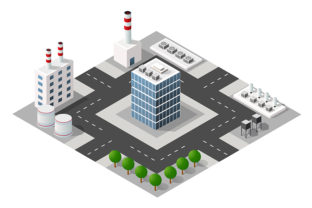
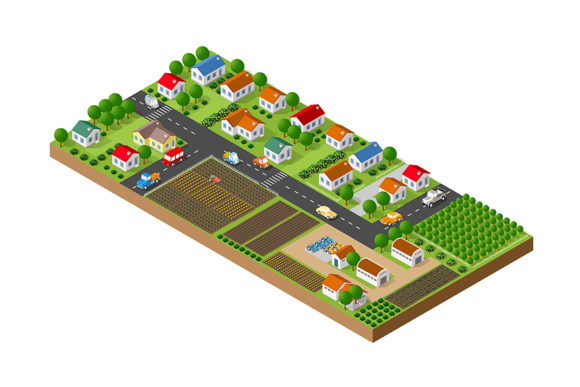
If you have ever scrolled through a tech blog, looked at a complex infographic, or admired a clean UI design on a mobile app, you have likely encountered the 3D isometric landscape. It is that specific type of illustration where buildings, streets, and trees appear to float in space with no vanishing point, creating a sense of depth without the distortion of traditional perspective. While it might sound like a niche artistic term, this visual style has become a powerhouse for communication across almost every industry. It transforms dry data into engaging stories and turns simple concepts into immersive environments.
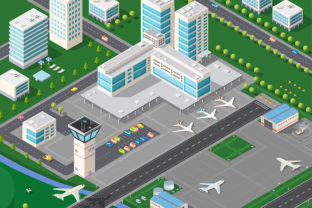
At its core, an isometric view represents a three-dimensional object in two dimensions, maintaining parallel lines that never converge. When applied to a small town setting—complete with houses, shops, parks, and winding roads—it creates a charming yet functional world. This isn't just about making things look retro or cute; it is about clarity. The flat, vector-based nature of these graphics allows designers to pack a surprising amount of information into a single image without overwhelming the viewer.
Why Industries Are Swapping Photos for Isometric Towns
The shift toward using 3D isometric landscapes isn't merely a trend; it solves real problems in how we consume information. In the past, companies relied heavily on stock photography to convey scale and location. However, photos often contain too much noise. They capture the sky, the weather, and random distractions that pull attention away from the message. An isolated isometric illustration strips away the irrelevant details, leaving only the essential elements: the architecture, the infrastructure, and the people.
Consider the real estate sector. A developer selling a new apartment complex needs to show potential buyers exactly what the neighborhood will look like before a single brick is laid. A photo of a construction site is muddy and confusing. A 3D isometric landscape of the future town, however, can clearly display the layout of the streets, the placement of the park, the distance to the nearest bakery, and the proximity of the bank. It allows residents to visualize their daily life in a way that blueprints simply cannot achieve.
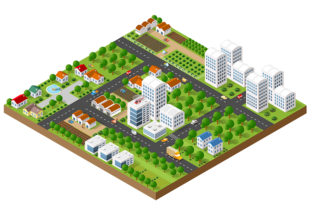
This approach extends far beyond property sales. Urban planners use these models to present city development projects to the public. By rendering a small town with houses and streets, they can demonstrate traffic flow, pedestrian pathways, and green spaces. It makes complex zoning laws understandable to the average citizen. When a community meeting presents a colorful map of a proposed shopping district, the urban environment feels tangible rather than abstract.
Practical Applications Across Different Sectors
The versatility of this design style means it serves as a universal language for various audiences. Whether you are a marketer, an educator, or a product manager, there is a scenario where an isometric view adds immediate value.
- Tech and Software: Many SaaS companies use isometric illustrations to explain cloud infrastructure. Instead of showing a boring server room, they create a cityscape where each building represents a different service or data center. The "streets" become data pipelines, and the "houses" are user accounts. It makes the invisible visible.
- E-commerce and Retail: Imagine browsing a store that sells furniture or home decor. A 3D isometric view of a living room setup allows customers to see how items fit together spatially. Similarly, a graphic banner for a local market can feature a detailed illustration of stalls, shoppers, and fresh produce, evoking a sense of community that a standard photo might miss.
- Education and Infographics: For students learning geography or history, a retro-style village scene can bring a historical period to life. It acts as a visual anchor for text-heavy articles. You can highlight specific elements like a school, a restaurant, or a construction site to teach about local economies or urban growth patterns.
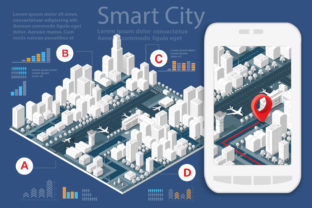
- Gaming and Entertainment: Strategy games have long relied on isometric views because they offer the perfect balance between strategic overview and detail. Players need to see the entire board to make decisions, but they also need to recognize individual units. This same logic applies to interactive maps on travel websites, where users can click on different parts of a town to get more information.
Designing for Clarity: What Makes It Work?
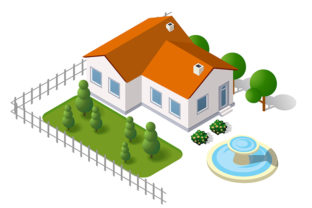
When you decide to incorporate a 3D isometric landscape into your project, the goal is always to enhance understanding, not just decorate. The magic lies in the balance between detail and simplicity. A successful illustration of a home or an apartment block must be recognizable immediately. If the artist spends too much time on window reflections or door textures, the image becomes cluttered.
The color palette plays a crucial role here. Because these images are often used against white or light backgrounds, using a vibrant, colorful scheme helps elements pop. Think of the contrast between the green of the trees, the red of a shop roof, and the gray of the road. These colors guide the eye naturally. A well-designed template will use these hues to categorize information. For instance, all residential areas might share a warm tone, while commercial zones use cooler blues or greens.
Another critical consideration is the "flatness" of the style. Even though it is called 3D, the aesthetic relies on flat shading techniques. This ensures the image remains crisp at any size. Whether you are scaling up a banner for a billboard or shrinking it down to an icon on a mobile screen, the vector format guarantees sharp edges. This scalability is vital for modern web design, where screens vary wildly in resolution.
Navigating Challenges and Limitations
While the benefits are clear, there are practical considerations to keep in mind when choosing this style. One common pitfall is overcomplication. It is tempting to fill every inch of the landscape with activity—adding cars, birds, clouds, and pedestrians. However, if the scene is too busy, the viewer's brain struggles to process the hierarchy of information. The street should lead the eye, not distract from it.
There is also the issue of cultural context. Isometric art often leans towards a stylized, idealized version of reality. It looks neat, organized, and safe. If you are trying to convey grit, chaos, or a very specific, gritty urban atmosphere, a clean village illustration might feel out of place. It works best for concepts that are aspirational, educational, or systematic.
Furthermore, accessibility is a growing concern. Designers must ensure that the contrast between the foreground elements (like a shop or store) and the background is sufficient for users with visual impairments. The lack of shadows in some flat styles can sometimes flatten the depth perception too much, making it hard for some users to distinguish layers. Testing your design with different color blindness simulators is a smart step before finalizing a map or infographic.
Making the Most of Your Visual Assets
Ultimately, the power of the 3D isometric landscape lies in its ability to humanize data. It turns a spreadsheet of population statistics into a bustling town full of life. It transforms a list of services into a walkable neighborhood. When you are planning your next project, ask yourself: "Would a photo work, or would a structured, illustrated world tell the story better?"
For businesses looking to stand out, investing in custom illustrations of their specific environment pays off. A generic image of a city is nice, but an accurate representation of your actual environment—with your specific bank, your unique architecture, and your local market—builds trust. It shows you care about the details of the place you operate in.
Whether you are designing a travel brochure, creating a corporate presentation, or launching a new app, the principles remain the same. Keep it clean, focus on the relevant features, and let the geometry do the heavy lifting. The result is a visual experience that is not only beautiful but deeply functional, guiding your audience through a world they can understand at a glance.